
Getting people to click on your website, ad, or social media post is only the beginning. The real challenge is turning those clicks into meaningful actions—and ultimately, loyal customers.
A strong marketing funnel helps businesses guide potential customers from their first interaction with a brand to the point where they make a purchase and continue engaging with the business.
What Is a Marketing Funnel?
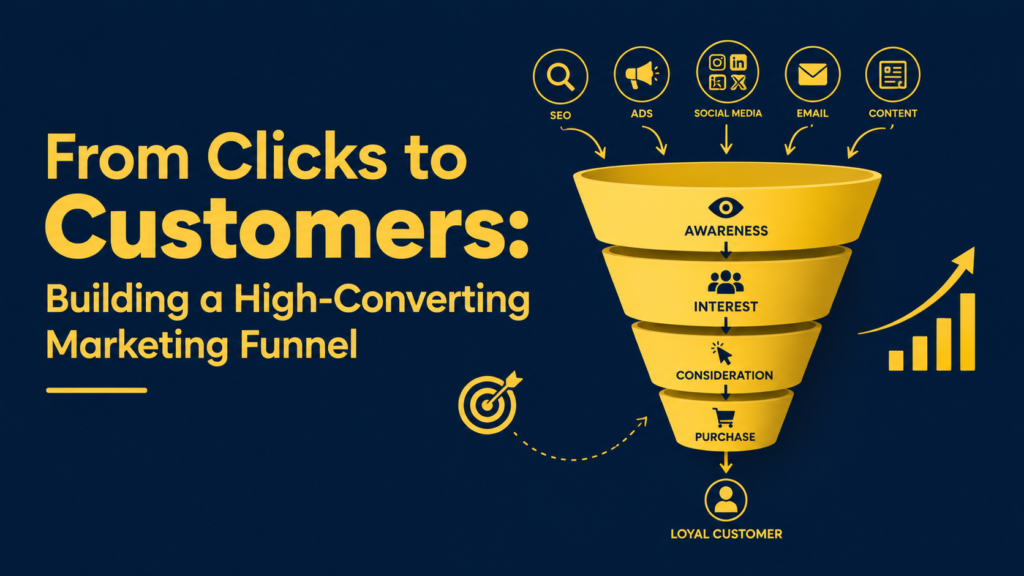
A marketing funnel represents the journey a potential customer takes before becoming a customer.
It typically moves through four key stages:
Awareness → Interest → Consideration → Conversion
Each stage requires a different marketing approach. Instead of simply generating traffic, businesses need to create the right experience at every step.
1. Attract the Right Audience
The first step is getting your brand in front of people who are likely to need your product or service.
You can attract your target audience through:
- SEO and organic search
- Social media marketing
- Google Ads
- Content marketing
- Email marketing
- Influencer and partnership campaigns
The goal isn’t simply to generate more traffic. It is to generate relevant traffic.
100 qualified visitors can be more valuable than 10,000 people who have no interest in what you offer.
2. Turn Attention Into Interest
Once visitors arrive, you have only a short time to capture their attention.
Your website and content should quickly communicate:
- What you offer
- Who you help
- What makes your brand different
- Why visitors should trust you
- What they should do next
Strong headlines, engaging content, clear benefits, testimonials, case studies, and compelling visuals can help move visitors further down the funnel.
3. Build Trust and Create Desire
People rarely make purchasing decisions based on one interaction.
At this stage, your job is to reduce uncertainty and show potential customers why your solution is worth considering.
You can build trust through:
- Customer testimonials
- Reviews and ratings
- Case studies
- Educational content
- Product demonstrations
- FAQs
- Guarantees or clear policies
- Social proof
The more questions you answer before the customer asks them, the easier you make the buying decision.
4. Create a Clear Path to Conversion
A high-converting funnel should make the next step obvious.
Your calls-to-action should be clear and action-oriented, such as:
Get a Free Consultation
Request a Quote
Start Your Free Trial
Book a Demo
Buy Now
Avoid giving visitors too many competing options. A focused page with one clear objective can make the conversion journey much easier.
5. Follow Up With Potential Customers
Not every visitor will convert on their first visit.
That doesn’t mean they’re lost.
Email marketing, remarketing campaigns, social media content, and personalized follow-ups can bring potential customers back into the funnel.
For example:
Website Visit → Download Guide → Email Follow-Up → Product Demo → Purchase
The key is to stay relevant without becoming intrusive.
6. Measure What Matters
A successful funnel isn’t built once and forgotten. It needs continuous optimization.
Track metrics such as:
- Website traffic
- Engagement rate
- Landing-page conversion rate
- Cost per lead
- Lead-to-customer rate
- Customer acquisition cost
- Return on ad spend
- Customer lifetime value
These numbers help identify where potential customers are dropping out of the journey.
If you are getting plenty of clicks but very few leads, your landing page may need improvement. If you’re generating leads but not sales, your follow-up or sales process may need attention.
From Clicks to Customers
The difference between a campaign that generates clicks and one that generates revenue is the customer journey.
A successful marketing funnel connects every stage—from attracting the right audience to building trust, encouraging action, following up, and creating long-term relationships.
Instead of asking:
“How many people visited my website?”
Start asking:
“How many of those visitors became valuable customers?”
That’s where digital marketing moves beyond clicks and starts creating real business growth.
Final Thoughts
Building a high-converting marketing funnel requires more than running ads or publishing content. It requires understanding your audience, delivering the right message at the right time, and creating a seamless path from awareness to conversion.
When every stage of the funnel works together, your marketing becomes more than a source of traffic—it becomes a system for building brands, driving demand, and growing revenue.
Ready to Turn Clicks Into Customers?
A well-designed digital marketing strategy can help you attract the right audience, generate qualified leads, and turn opportunities into measurable business growth.
Let’s build a marketing funnel that turns attention into action—and action into revenue.connect